How to Potty Train a Great Pyrenees Puppy
General training information. Every dog is an individual; for health or behavior concerns, see your veterinarian.
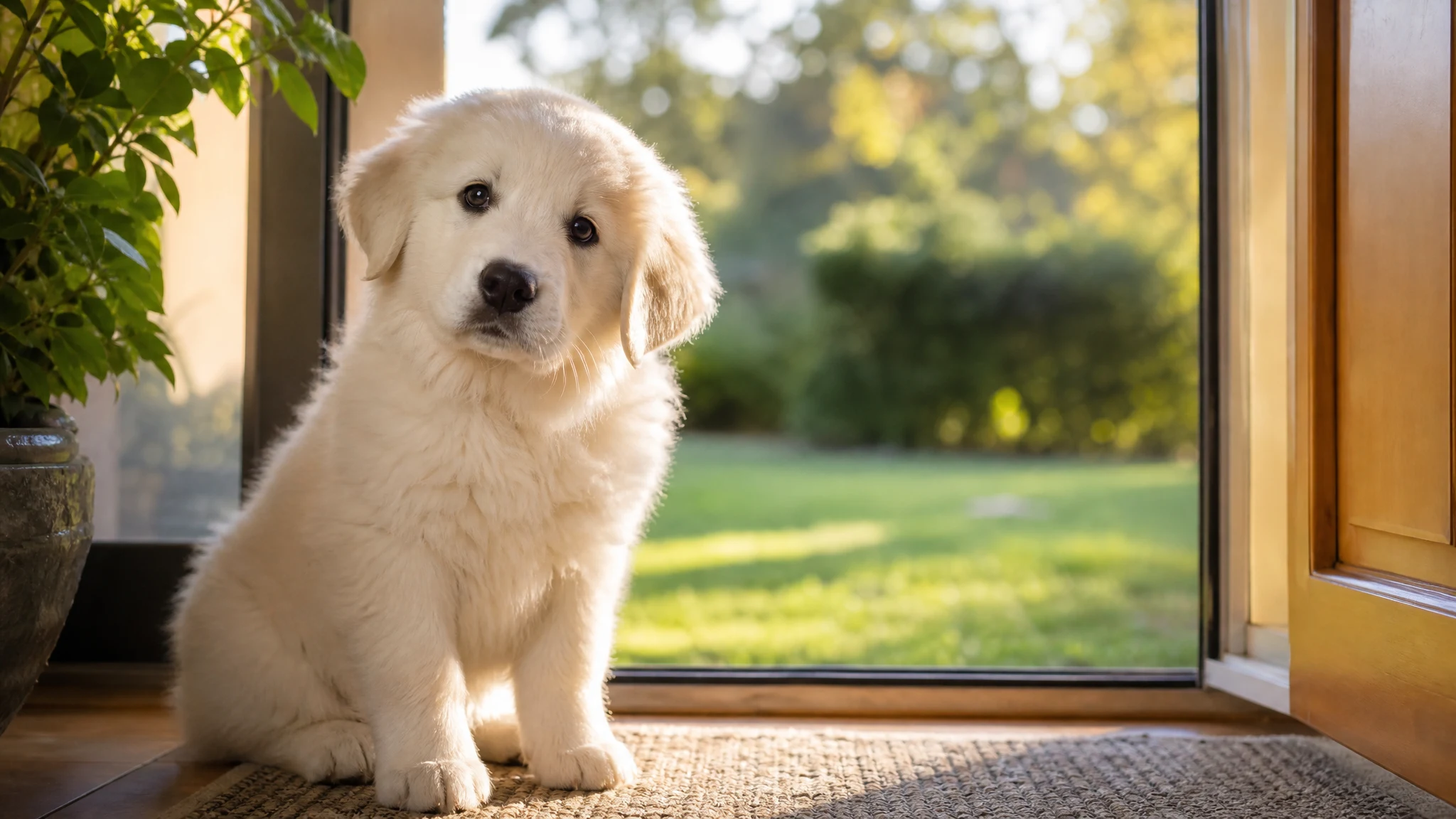
A Great Pyrenees puppy is a fluffy, sweet bundle that will soon be a very large dog. That makes early habits matter. If you learn how to potty train a Great Pyrenees now, you will save yourself a lot of cleanup later.
This guide covers great pyrenees potty training from the first day home. It uses a simple schedule, a crate, and rewards. It also explains why this breed's independent streak changes how you teach.
Why House Training a Great Pyrenees Takes Patience
The Great Pyrenees was developed in the Pyrenees Mountains between Spain and France to guard livestock, according to PetMD. Guardians had to think for themselves, often far from a person giving orders.
That history shows up at home. PetMD, quoting the Great Pyrenees Club of America (GPCA), describes the temperament as calm, independent and alert. Hill's Pet rates trainability at 2 on a 1 to 5 scale, which it labels somewhat difficult. Individual dogs vary, but expect a puppy who sometimes seems to consider your plan and decide on its own.
The good news is that independent does not mean unteachable. It means short, consistent, rewarding routines work better than long drills or repeated nagging. PetMD citing the GPCA advises early socialization and patient, consistent positive training.
Size matters from the start
Adults stand about 25 to 32 inches at the shoulder, per PetMD. Hill's lists 85 to 120 pounds, with males larger. A grown dog that has never learned where to go is a big problem to clean up. Start the routine while the puppy is small and the mess is manageable.
What You Need Before You Begin
Gather these items before the puppy comes home, or as soon after as you can.
- A crate that fits the adult dog. Choose one big enough for a large breed. Many come with a divider, so you can shrink the space while the puppy is small. A crate that is too roomy lets a puppy use one end as a bathroom.
- Small, soft treats. Pick something your puppy loves and can swallow fast. Keep them in a pouch or by the door.
- A leash and a secure outdoor spot. Hill's notes that this breed tends to roam, so a fenced area is helpful. A leash works well for potty trips, too.
- Enzyme-based cleaner for pet accidents. It helps remove odor so the spot smells less like a bathroom to your puppy.
- Paper towels and a trash bag. Keep them near the door.
- A notebook or phone note. Log meals, naps, and potty trips for the first week or two. Patterns show up quickly.
- A large-breed puppy food. Petful advises large-breed puppy food. Ask your veterinarian which one suits your puppy, and how much to feed.
Step-by-Step: How to Potty Train a Great Pyrenees Puppy
Step 1: Pick one potty spot
Choose a single outdoor area and always walk the puppy there on leash. Standing in the same place helps the puppy connect the spot with the job. Stay quiet and boring until it goes. Play comes after.
Step 2: Set a feeding schedule
What goes in on a schedule tends to come out on a schedule. Feed measured meals at set times rather than leaving food out all day. Ask your veterinarian for the right amount and number of meals for your puppy's age.
Pick up the water bowl shortly before bedtime if your veterinarian agrees. Never limit water during the day without that advice.
Step 3: Take the puppy out on a predictable rhythm
A young puppy needs many trips. Plan on going out at these times:
- First thing in the morning, before anything else
- Right after every meal
- After every nap
- After a play session or excited greeting
- Before crating and before bed
- Every so often throughout the day, even if the puppy seems fine
I am not giving you an exact number of hours a puppy can hold it, because it changes with age and from dog to dog. Ask your veterinarian what is reasonable for your puppy right now. When in doubt, go out sooner.
Step 4: Reward right away
The moment your puppy finishes, say a cheerful word like "Yes!" and hand over a treat. Do it at the potty spot, not after you walk back inside. Timing is everything. A reward that arrives ten seconds late rewards the walk back, not the potty.
A calm, independent puppy may not care much about praise alone. Treats give you something worth working for.
Step 5: Use the crate as a rest spot, not a punishment
Most puppies avoid soiling the place where they sleep, which is why crates help with house training. Make the crate comfortable. Feed a meal in there sometimes and toss in a chew toy.
Take the puppy straight outside when it comes out of the crate. Do not leave a puppy in a crate longer than it can comfortably manage. If you cannot be home for long stretches, arrange for someone to give the puppy a break.
Step 6: Supervise when the puppy is loose
When the puppy is out of the crate, keep it in sight. Use a leash tied to your belt, a baby gate, or a small room. Watch for sniffing in circles, wandering off, or suddenly stopping play. Those can be signs it needs to go. Calmly carry or lead the puppy outside.
Step 7: Add a cue
After a few days of success, say a short phrase like "go potty" just as the puppy starts to go. Over time the phrase can help prompt the behavior. Keep the words the same every time and let everyone in the house use them.
Step 8: Handle accidents without punishment
Accidents will happen. When they do, stay calm.
- If you catch the puppy in the act, make a short, neutral noise to interrupt, then carry or lead it outside.
- Reward if it finishes outside.
- Clean the indoor spot with an enzyme cleaner.
- Think about what went wrong. Was the trip too late? Was supervision lax?
Never scold, rub the puppy's nose in it, or punish after the fact. This goes against the reward-based approach supported by the American Veterinary Society of Animal Behavior (AVSAB). It can also teach a puppy to hide when it needs to go, which makes training harder.
Sample Daily Schedule
Adjust this to your household and your puppy's age. Your veterinarian can help fine-tune meal times and amounts.
| Time | What happens |
|---|---|
| Wake-up | Straight outside to the potty spot, reward |
| Breakfast | Meal, then outside within a short time |
| Mid-morning | Play, then outside, then crate nap |
| Midday | Outside after waking, then lunch if your vet advises it |
| Afternoon | Supervised play, outside, rest |
| Dinner | Meal, then outside |
| Evening | Quiet time, outside before bed |
| Bedtime | Last potty trip, then crate |
| Overnight | Quiet trips out if the puppy wakes and needs them, with no play |
Breed-Specific Tips for Great Pyrenees Puppies
Expect an independent learner
Hill's rates barking at 3 of 5 and trainability at 2 of 5. Your puppy may wander off from the potty spot to investigate, or ignore your cue. Keep the puppy on leash, stay patient, and reward the moment it does the job.
Use a secure space
Because Hill's says the breed tends to roam, do not open the door and let a puppy out alone to "figure it out." Go with it. You can reward the right behavior, and the puppy cannot wander or find something to chew.
Watch the weather
Hill's lists heat sensitivity among this breed's challenges. On hot days, take shorter potty trips and provide shade and water. Talk with your veterinarian about keeping a thick-coated puppy comfortable.
Keep play gentle while growing
Petful notes that near adult height comes around 18 months, with chest, muscle and coat maturing into the second or third year. It advises avoiding repetitive high-impact exercise, forced running and frequent jumps from vehicles. Lift or ramp a young puppy out of the car rather than letting it jump to the potty spot. Do not add calcium or supplements to speed growth.
Take a class
PetMD, citing the GPCA, recommends obedience classes for first-time owners. A good reward-based class can support your house training and socialization. Check with local trainers about their methods before you enroll, and skip any that use shock, prong or choke collars.
Common Mistakes to Avoid
- Waiting too long between trips. Most accidents come from a missed window, not a stubborn puppy.
- Punishing accidents. It can make a puppy anxious and secretive.
- Giving too much freedom too soon. Add space slowly after several accident-free weeks.
- Skipping the cleanup. Lingering odor can draw the puppy back to the same spot.
- Inconsistent rules. If one person rewards and another scolds, the puppy gets mixed messages.
- Playing before the puppy goes. Make play the reward after the potty.
- Using a crate that is too big. Size it so the puppy can stand, turn and lie down, but not much more.
What Results to Expect
Every puppy learns at its own pace. Many puppies start to get the idea within a few weeks of a steady routine, and full reliability often takes months. Because this is a slow-to-mature, independent breed, you may need to be patient. Setbacks around changes in routine, teething or new surroundings are common.
Following a schedule, rewarding promptly and staying calm after accidents may help your puppy build good habits. It will not happen on a fixed timeline. If progress stalls, or if your puppy seems to strain, go very often, or have frequent accidents after a period of success, call your veterinarian. Those can have medical causes, and only a veterinarian can sort that out.
A Quick Note on Growing Up
Even a puppy that seems fully trained at four or five months may slip as it grows. Keep up the routine, keep rewarding, and give extra trips during busy or stressful days. Adult dogs of this breed need moderate exercise, and Hill's lists 20 to 40 minutes a day, so daily walks also give regular chances to go outside.