How Much Exercise Does a Great Pyrenees Need? Plus Brain Games
General training information. Every dog is an individual; for health or behavior concerns, see your veterinarian.
If you are wondering how much exercise a Great Pyrenees needs, the short answer is moderate. This is a big, thick-coated dog bred to guard livestock on mountain pastures, not a dog built for hours of fetch. But a calm dog still needs a daily routine, and a bored Pyrenees can find its own jobs, like patrolling the fence line or barking at every shadow.
This guide walks you through a simple plan for Great Pyrenees exercise and Great Pyrenees mental stimulation. You will get daily targets, limits for growing puppies, and brain games that fit what this breed was developed to do.
What the Breed Sources Say About Exercise
Hill's Pet rates the Great Pyrenees a 2 out of 5 for energy, which it labels low energy. Hill's lists 20 to 40 minutes of activity a day. PetMD and Hill's both describe moderate daily activity, such as gentle walks or hiking.
Those are general ranges. Individual dogs vary, so treat the numbers as a starting point and adjust with your veterinarian's guidance.
Two other points from Hill's and PetMD shape the whole plan. Pyrenees tend to roam, so they need secure fencing. And they are sensitive to heat, so timing matters as much as length.
Materials You Will Need
- A sturdy flat collar or a well-fitted harness, plus a standard leash
- Secure fencing for any off-leash time in a yard
- Small, soft treats your dog loves
- A food puzzle or snuffle mat (or a muffin tin and tennis balls from home)
- Cardboard boxes, old towels and paper bags for homemade games
- Fresh water, and a shaded or cool spot for rests
- A timer or phone clock so you can track sessions
Step 1: Set a Daily Baseline for an Adult
For a healthy adult, start with the 20 to 40 minutes a day that Hill's lists. Split it into two outings if you can, such as one walk in the morning and one in the evening.
Aim for steady, unhurried movement. Gentle walks and easy hikes fit this breed better than hard running. Let your dog set a comfortable pace and stop to look around.
If your dog seems tired, lags behind, or lies down on the trail, end the outing. Those are signs to go easier next time.
Step 2: Match Exercise to Life Stage
Puppies
Petful notes that Great Pyrenees puppies grow slowly. They reach near adult height around 18 months, and chest, muscle, coat and maturity continue into the second or third year.
Because of that long growth period, Petful advises avoiding repetitive high-impact exercise, forced running, and frequent jumps from vehicles. Petful also says not to add calcium or supplements to speed growth, and it advises large-breed puppy food. Talk to your veterinarian about feeding and about how much activity is right for your puppy's age.
The sources I relied on do not give a minutes-per-month rule for puppies. If you want a specific number, ask your veterinarian.
In practice, that means short, relaxed outings, soft ground, and lots of play that does not involve pounding or sharp turns. Mental work is a great way to tire a puppy without stressing growing joints.
Adults
Adults can follow the baseline in Step 1. Keep the routine regular. A dog that gets a predictable walk and some brain work is often easier to live with than one that gets a long hike one day and nothing the next.
Seniors
PetMD gives a life expectancy of 10 to 12 years for the breed. The sources do not give separate senior exercise numbers. As your dog ages, ask your veterinarian how to adjust walks, and lean more on sniffing and food games, which are easy on the body.
Step 3: Protect Your Dog in the Heat
Hill's lists heat sensitivity among the breed's health concerns. Plan outings for cooler parts of the day, bring water, and choose shade when you can.
If your dog seems overheated, stop and call your veterinarian. Do not wait to see if it passes.
PetMD also lists gastric dilatation and volvulus, known as bloat, as a breed risk. Ask your veterinarian how to schedule meals and exercise around each other, and what warning signs to watch for. I will not give medical advice here.
Step 4: Secure Your Space Before Off-Leash Time
Hill's notes that the breed needs secure fencing because it tends to roam. That roaming comes from the breed's original job of guarding livestock over wide pastures, according to Hill's and PetMD.
Walk your fence line and check for gaps, loose boards and spots where your dog could dig or squeeze through. Keep walks away from home on leash. A Pyrenees that decides to investigate something far away may not respond to a recall in the moment.
Step 5: Add Mental Stimulation Every Day
Great Pyrenees mental stimulation matters because this is an independent breed. The Great Pyrenees Club of America, quoted by PetMD, describes the temperament as calm, independent and alert. Hill's rates trainability a 2 out of 5, somewhat difficult. A dog like that tends to do best when the work feels like a job or a puzzle rather than a drill.
Here are five brain games to rotate through. Keep each to about five to ten minutes, and end while your dog is still interested.
Game 1: The Sniff Walk
Choose a quiet route and let your dog lead with the nose. Do not hurry. Standing at one interesting patch of grass for a minute is part of the exercise.
Sniff walks suit a breed with moderate physical needs. They let your dog gather information about the neighborhood, which is a gentle echo of patrolling a territory.
Game 2: Puzzle Feeders and Snuffle Mats
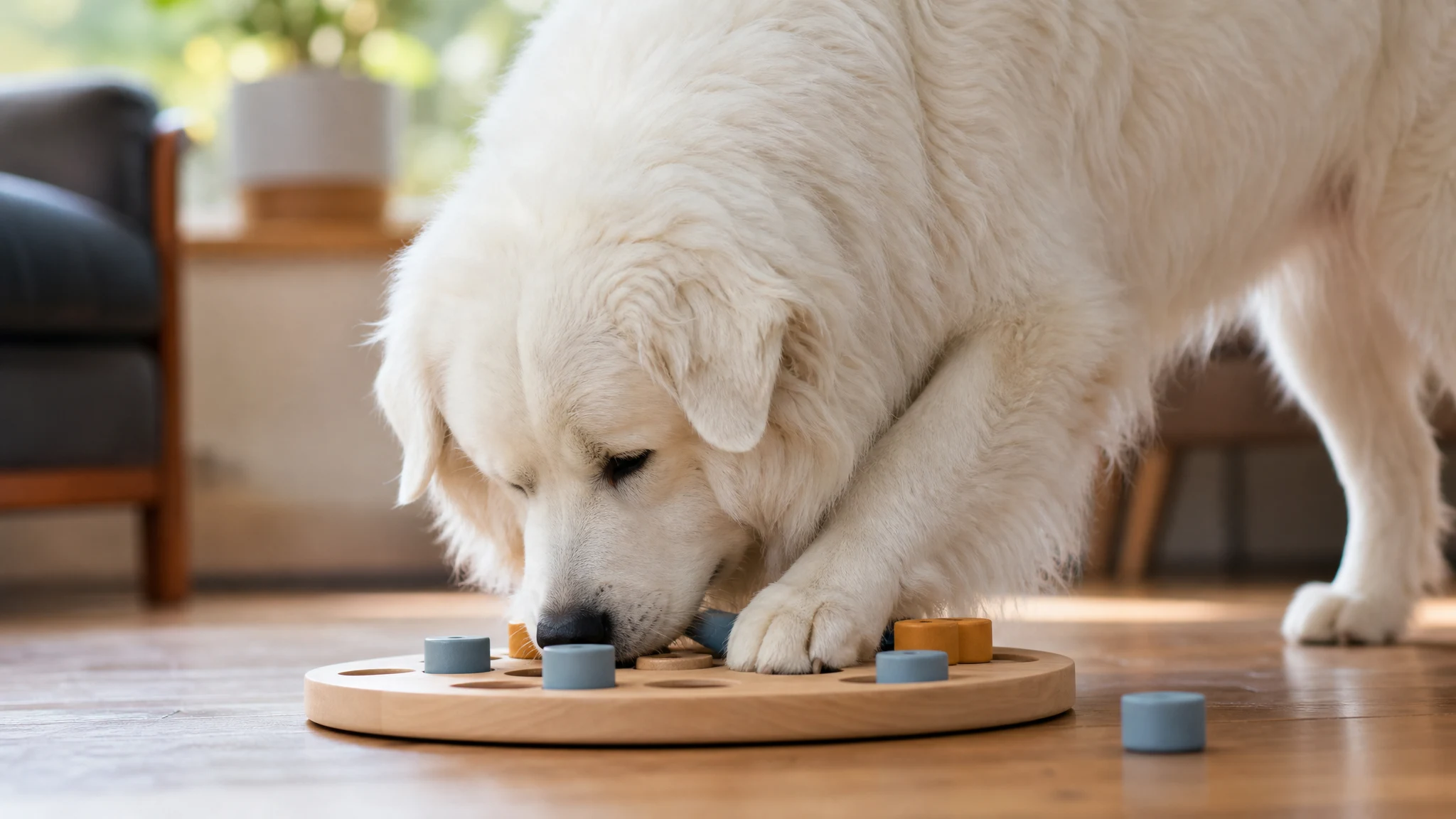
Put part of a meal in a puzzle feeder or scatter kibble in a snuffle mat. For a budget version, drop treats in a muffin tin and cover each cup with a tennis ball.
Start easy so your dog wins quickly. Make it harder only after your dog understands the game. Always supervise, and take away anything your dog starts to chew apart.
Game 3: Find the Treasure
Ask your dog to wait, or have a helper hold your dog, while you hide a few treats around a room. Release your dog with a cue like "find it." Celebrate each discovery calmly.
Over time, hide treats farther away or behind low obstacles. This builds on the same scanning and checking instinct that suits a guardian dog.
Game 4: Patrol and Check In
Because the breed was developed to guard livestock, many owners find that a "job" feels natural. In a secure yard, walk a loose loop with your dog on a long, comfortable leash. When your dog looks at you on their own, mark it with a calm "yes" and give a treat.
You are rewarding attention, which supports recall and focus. Individual dogs vary, so watch your own dog's response.
Game 5: Short Training Sessions
The Great Pyrenees Club of America lists obedience trials and Canine Good Citizen tests among the activities for the breed, and Hill's suggests agility. You do not have to compete to borrow the idea. Practice sit, down, wait, touch and leave it for a few minutes at a time.
Use rewards, keep sessions short, and be patient. PetMD, citing the Great Pyrenees Club of America, recommends obedience classes for first-time owners and advises early socialization and consistent positive training. For a full plan, see our complete guide to training a Great Pyrenees.
Step 6: Build a Weekly Rhythm
A simple schedule keeps things easy to follow. Here is one sample week for a healthy adult. Adjust it to your dog and your veterinarian's advice.
| Day | Physical | Mental |
|---|---|---|
| Monday | Two easy walks | Puzzle feeder at dinner |
| Tuesday | One longer walk | Short training session |
| Wednesday | Two easy walks | Find the treasure |
| Thursday | Gentle hike in cool weather | Sniff walk stops |
| Friday | Two easy walks | Snuffle mat |
| Saturday | Relaxed outing | Patrol and check in |
| Sunday | Light walk and rest | Short training session |
If your dog has a rough day or the weather is hot, swap the physical part for extra brain games. Food puzzles and sniffing still count as meaningful work.
Tips for Success
- Keep sessions short. Several small sessions usually beat one long one for an independent dog.
- Use rewards your dog truly wants. Reward-based training is the approach recommended by the American Veterinary Society of Animal Behavior.
- Rotate games. Novelty keeps puzzles interesting.
- Socialize early. Hill's says the breed is gentle and protective with children when socialized as puppies, and recommends supervision.
- Watch for barking triggers. Hill's rates barking a 3 out of 5, moderately vocal. A bored dog may bark more, so extra mental work may help, though it will not remove the instinct to alert.
Common Mistakes to Avoid
- Treating a calm dog as a low-need dog. Low energy does not mean no needs. Without outlets, a bright, independent dog can invent its own.
- Overdoing puppy exercise. Petful warns against repetitive high-impact activity, forced running and frequent jumps from vehicles. Lift or use a ramp if your veterinarian agrees.
- Exercising in the heat. Hill's lists heat sensitivity. Early morning and evening are usually kinder.
- Trusting a gate or fence you have not checked. This breed tends to roam, according to Hill's.
- Using harsh corrections. Do not use shock, prong or choke collars, alpha rolls, scruffing or dominance methods. They are not part of humane training and can damage trust.
- Adding supplements to speed growth. Petful advises against it. Ask your veterinarian before changing a puppy's diet.
What Results to Expect
With a steady routine, many owners find their dog is calmer at home, more focused on walks, and less likely to bark out of boredom. Results vary with age, health, background and temperament, and no plan can promise a specific outcome.
Over a few weeks, you may notice your dog settling faster after outings and enjoying puzzles more. Give it time, and keep sessions positive.
If your dog seems unusually tired, limps, struggles to breathe, or shows a sudden change in behavior, contact your veterinarian. PetMD and Hill's list hip and elbow dysplasia, patellar luxation and other conditions among the breed's health concerns, and only a veterinarian can sort out what is going on with your own dog.
Quick Recap
- Start adults at 20 to 40 minutes a day, as listed by Hill's.
- Keep puppies to gentle activity and avoid high-impact exercise.
- Plan around heat and ask your veterinarian about bloat risk.
- Check your fencing before any off-leash time.
- Add sniff walks, puzzle feeders and short training games every day.
- Follow a weekly rhythm and adjust as your dog changes.